Most SMBs do not need to start with an AI strategy. They need to name one workflow that already hurts.
That workflow is usually easy to spot. It is the inbox nobody wants to own, the quote that takes too long to assemble, the handoff that depends on one person’s memory, or the spreadsheet that quietly became the operating system. AI only helps when it is pointed at that real work.
Start with the broken loop
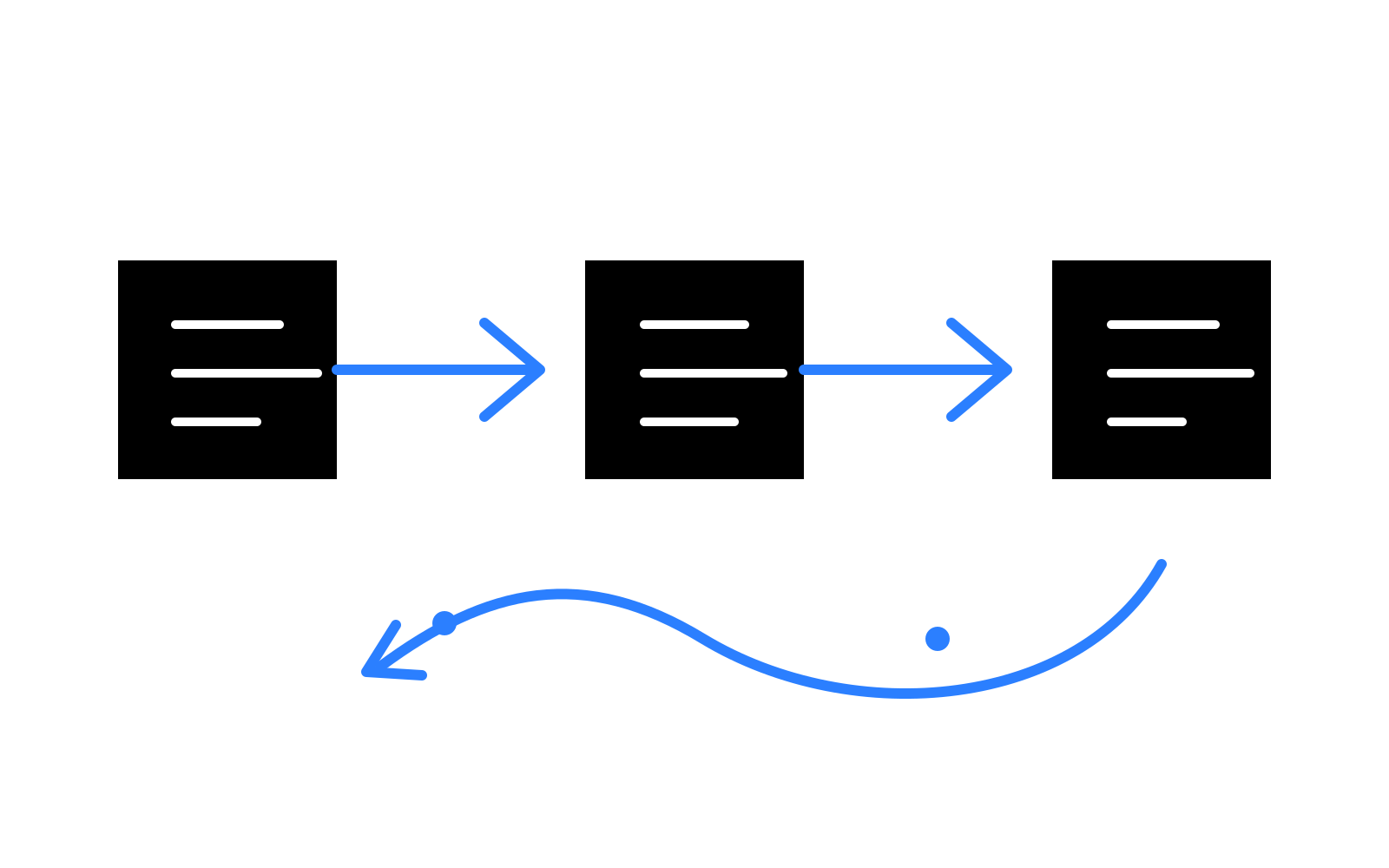
A useful first system should have a tight loop:
- Something comes in.
- The system reads or classifies it.
- It asks for missing context or retrieves the right internal knowledge.
- It prepares the next step.
- A person approves anything sensitive.
That is enough for a first deployment. It is also easier to evaluate than a broad transformation plan because the team can tell whether the work moved faster, fewer things got dropped, and the system stayed inside its lane.
Keep the first system small
The best first build is not the most impressive demo. It is the smallest useful system that fits into the tools already in use. If the team lives in email, documents, spreadsheets, and one line-of-business app, the first AI system should respect that reality.
Replacing the whole stack first turns a workflow problem into a migration project. Most SMBs do not need that risk.
The strategy can come later
Once one system is live, the next decisions get clearer. The team learns where private knowledge matters, which approvals cannot be automated, which inputs are too messy, and what support the system needs after launch.
That is strategy grounded in production evidence. Start there.