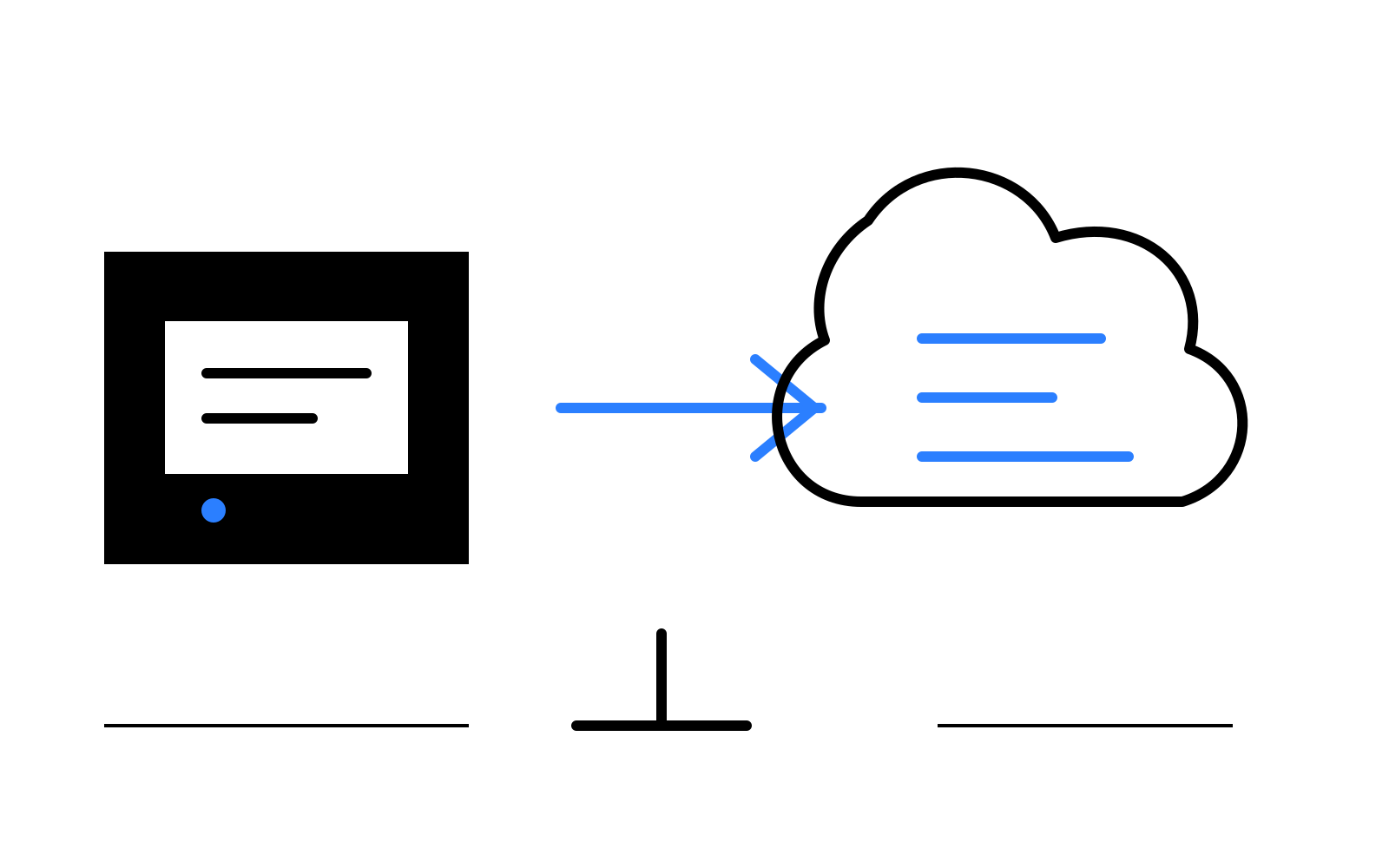
Cloud AI is often the right starting point. It is fast to deploy, easy to update, and usually good enough for document-heavy office workflows.
It is not always the right deployment model.
Some SMB operations happen in shops, yards, clinics, offices, vehicles, warehouses, or field environments where the assumptions behind cloud-only AI do not hold. Connectivity may be unreliable. Data may need to stay local. The workflow may depend on a camera, scanner, printer, sensor, or workstation that lives where the work happens.
The environment decides
Cloud-only AI starts to break down when the system needs to:
- Work during poor connectivity.
- Capture data from local devices.
- Keep sensitive source material on site.
- Respond with low latency.
- Run in a controlled physical environment.
- Support staff who are not sitting in a browser all day.
Those constraints do not mean AI is a bad fit. They mean deployment matters.
Hardware is part of the system
Sometimes the useful system is a small local workstation, an edge device, a mobile app, or a controlled network service that talks to cloud models only when it should. The hardware is not an accessory. It is part of the reliability story.
This is especially true for field data collection, visual classification, private document workflows, and operational systems that need to keep running when the internet is not perfect.
Use cloud where it earns its place
The answer is not local-only either. The practical answer is to put each part of the workflow where it belongs. Run local capture and private retrieval close to the work. Use cloud models or workers when they add real capability. Log the boundary so the team knows what happened where.
Deployment is a product decision. For some SMB workflows, cloud-only is simply the wrong product.