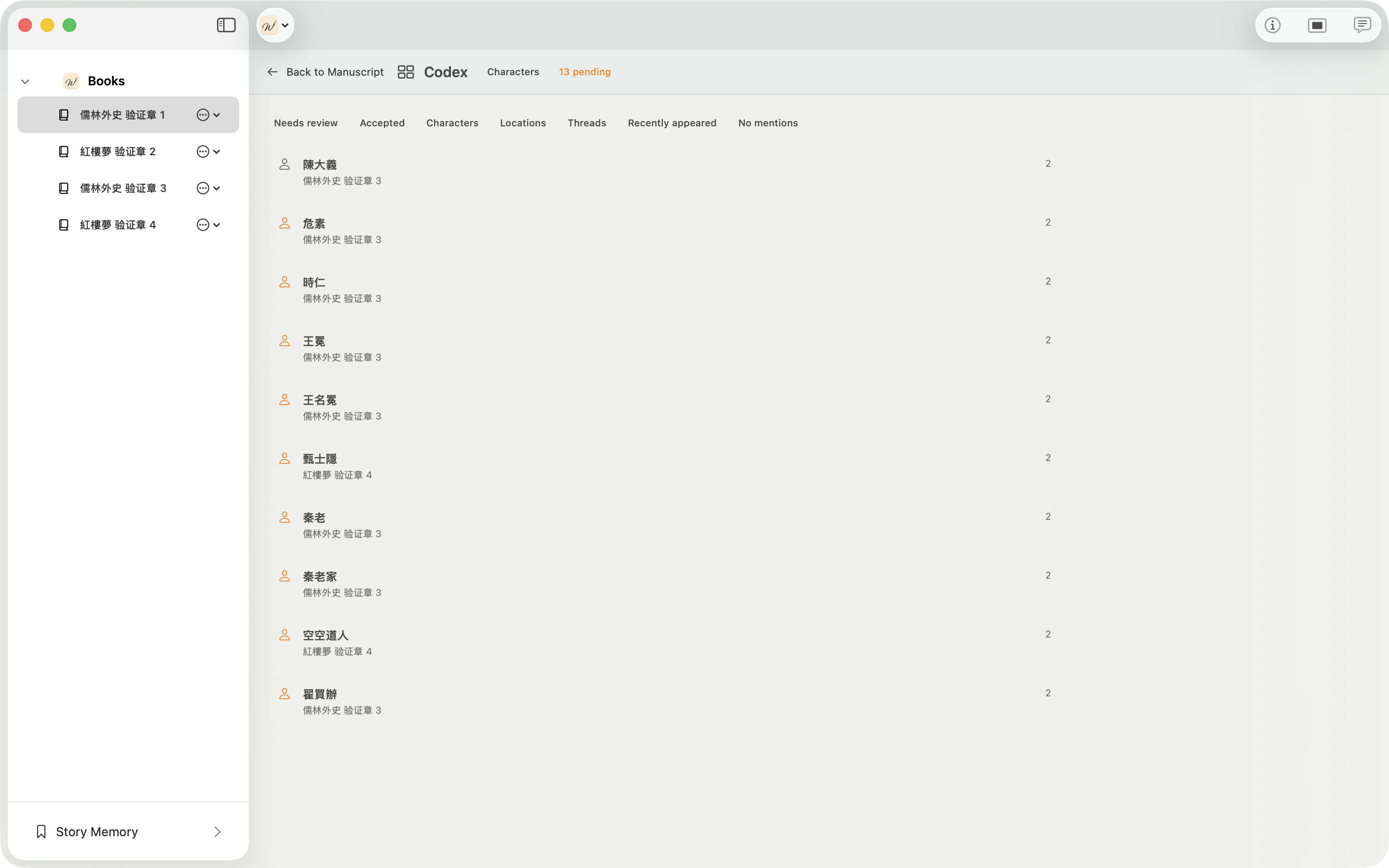
Story Memory and continuity
Characters, places, chapter planning, and long-form story state stay close to the manuscript.

WolfeWriter press kit
WolfeWriter keeps the manuscript central, puts Story Memory and planning beside it, and treats AI output as reviewable suggestions instead of automatic canon.
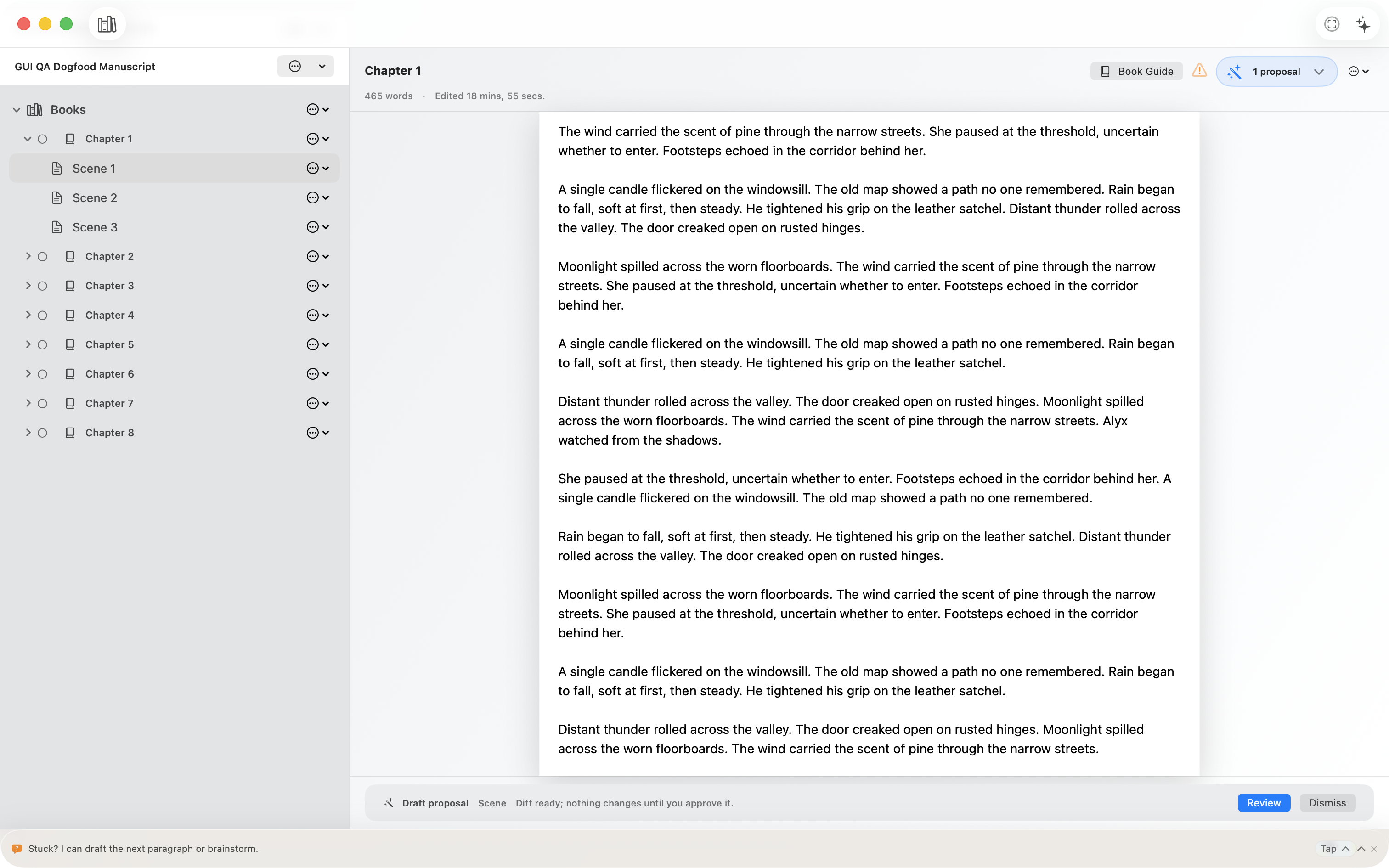
One continuous overview: the manuscript stays central, story state stays close, AI remains reviewable, and the project stays locally owned.
These are recordings of WolfeWriter running against an isolated QA project. They are product demonstrations, not paid endorsements, and the transitions are not presented as live interaction.
Characters, places, chapter planning, and long-form story state stay close to the manuscript.
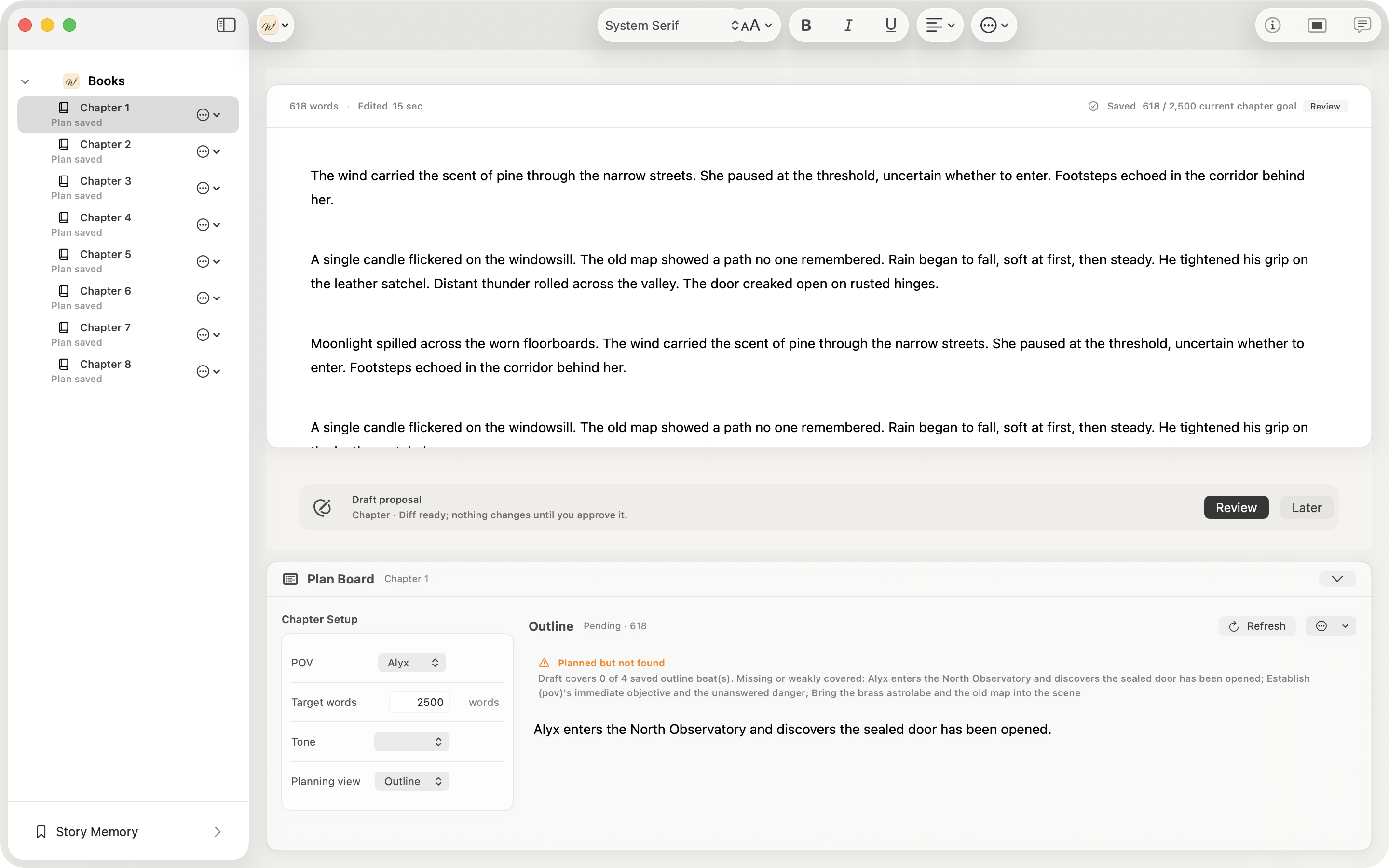
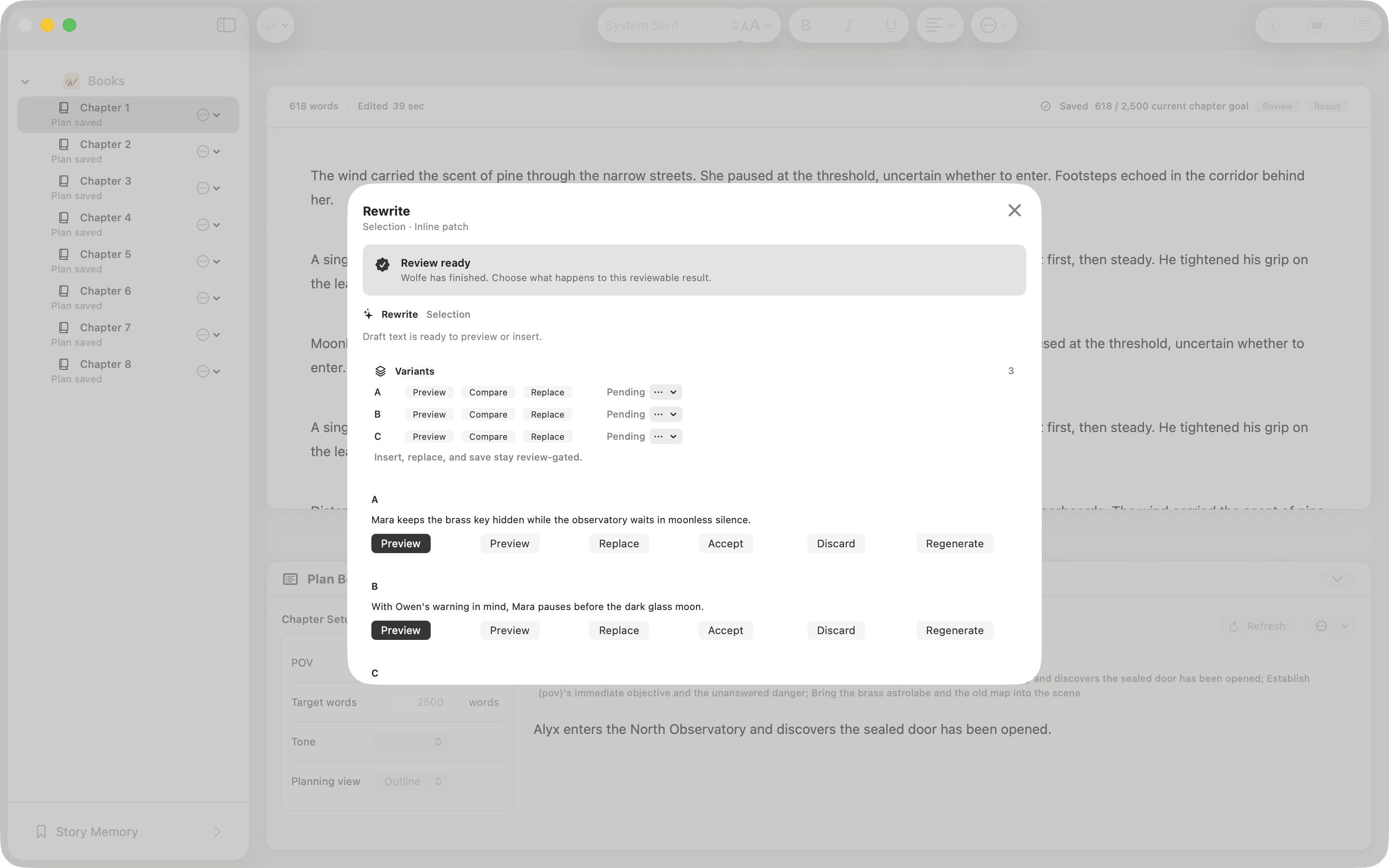
Generated suggestions remain reviewable until the writer decides what belongs in the book.
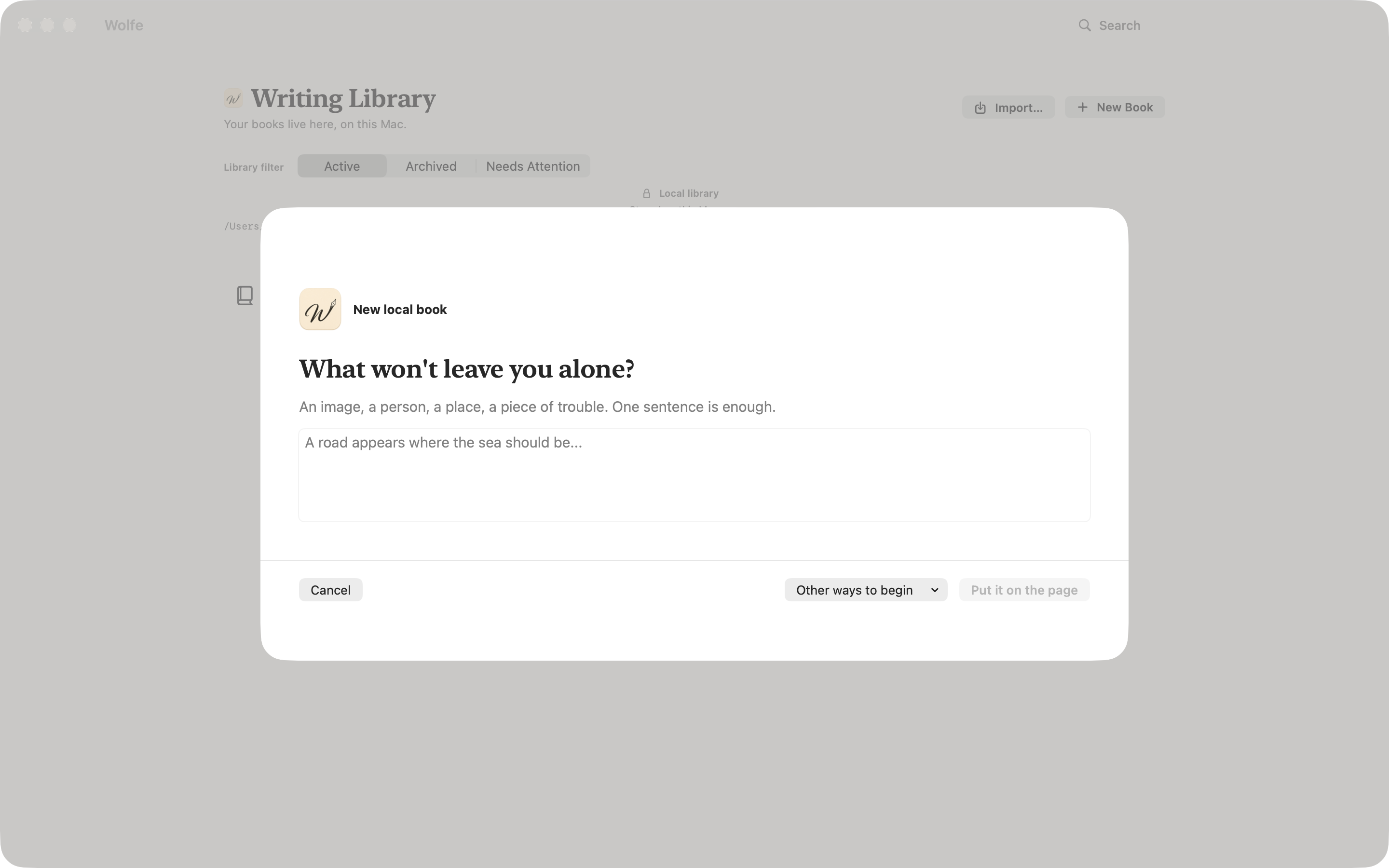
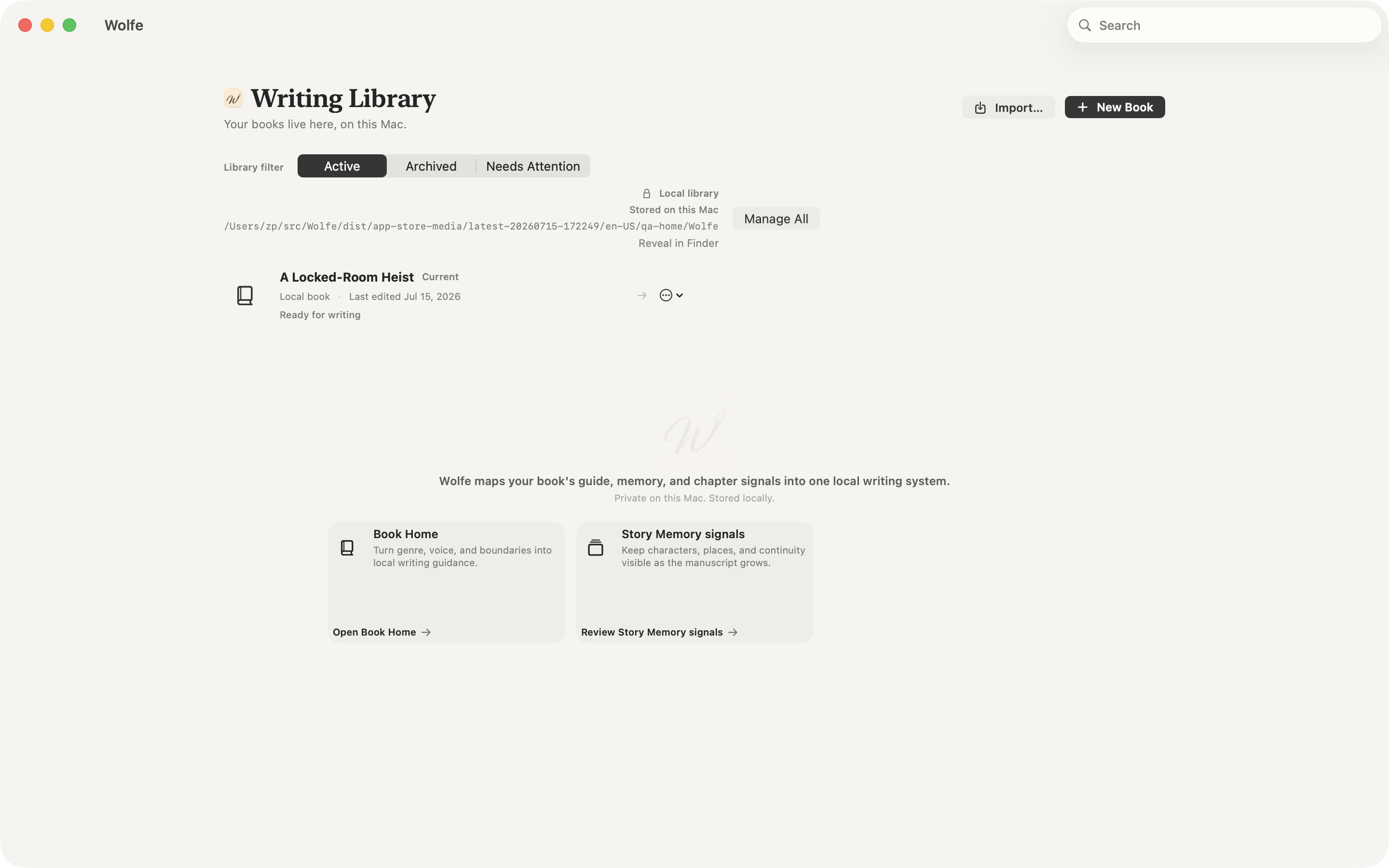
A local book project connects manuscript work, planning, memory, and continuity across chapters.
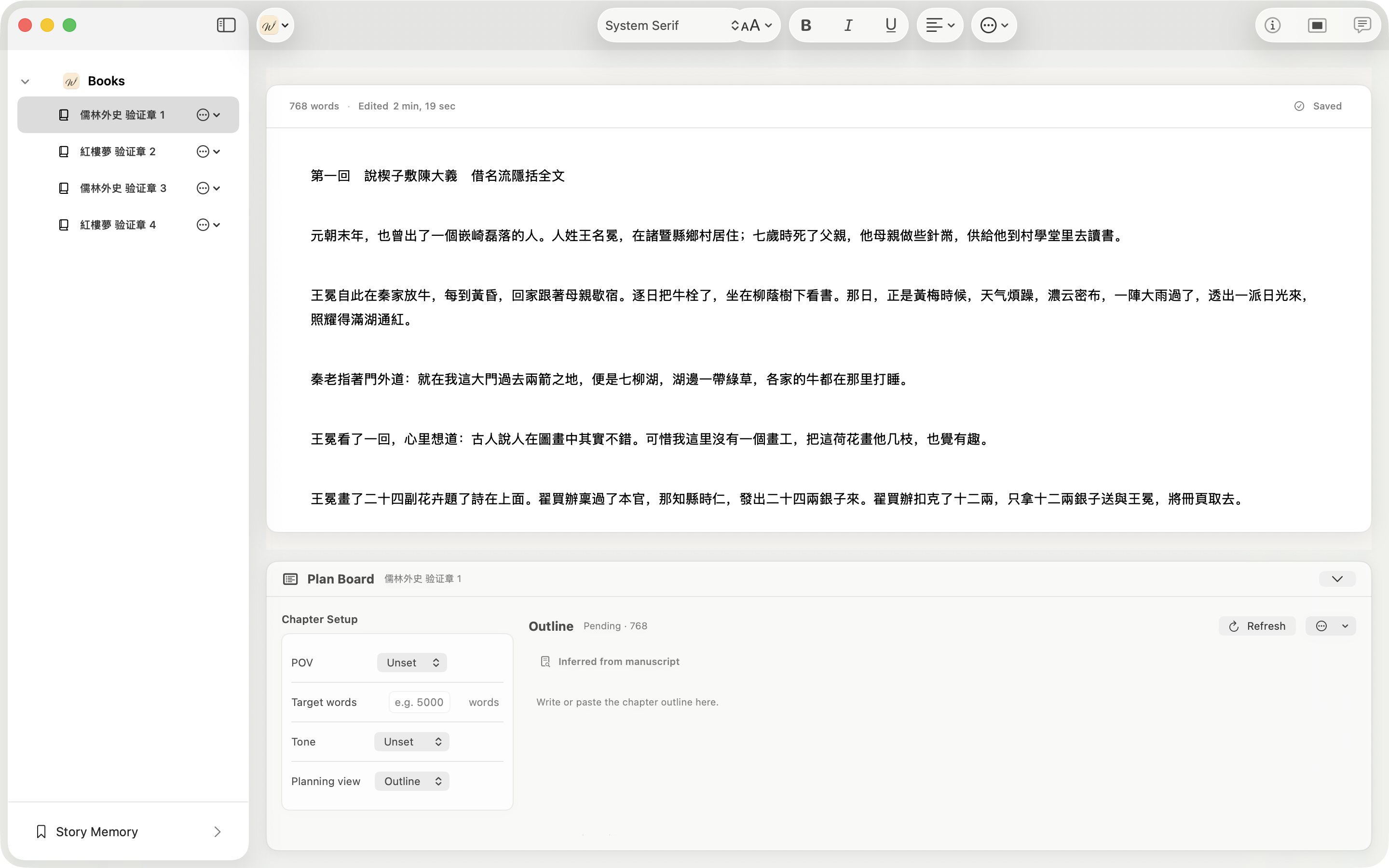
Move from beats and structure into the draft without turning the writing surface into a chat dashboard.
These screenshots were captured from the current macOS build against an isolated local project. They show the writing surface, Story Memory, planning, review, and library as they work today.
WolfeWriter began when the founder's wife returned to writing and he assumed a small AI-assisted writing tool would take about a week. The deeper problem was not generating more words. It was keeping a long story coherent: what characters know, what belongs to canon, what the book guide says, and what the writer actually wants to accept. That rabbit hole became a native Mac app built around manuscript ownership, local project state, and reviewable intelligence.
We can provide a promo code, a product walkthrough, or a specific build for testing. Honest feedback is welcome; coverage is never required.